
Last updated November 15, 2026
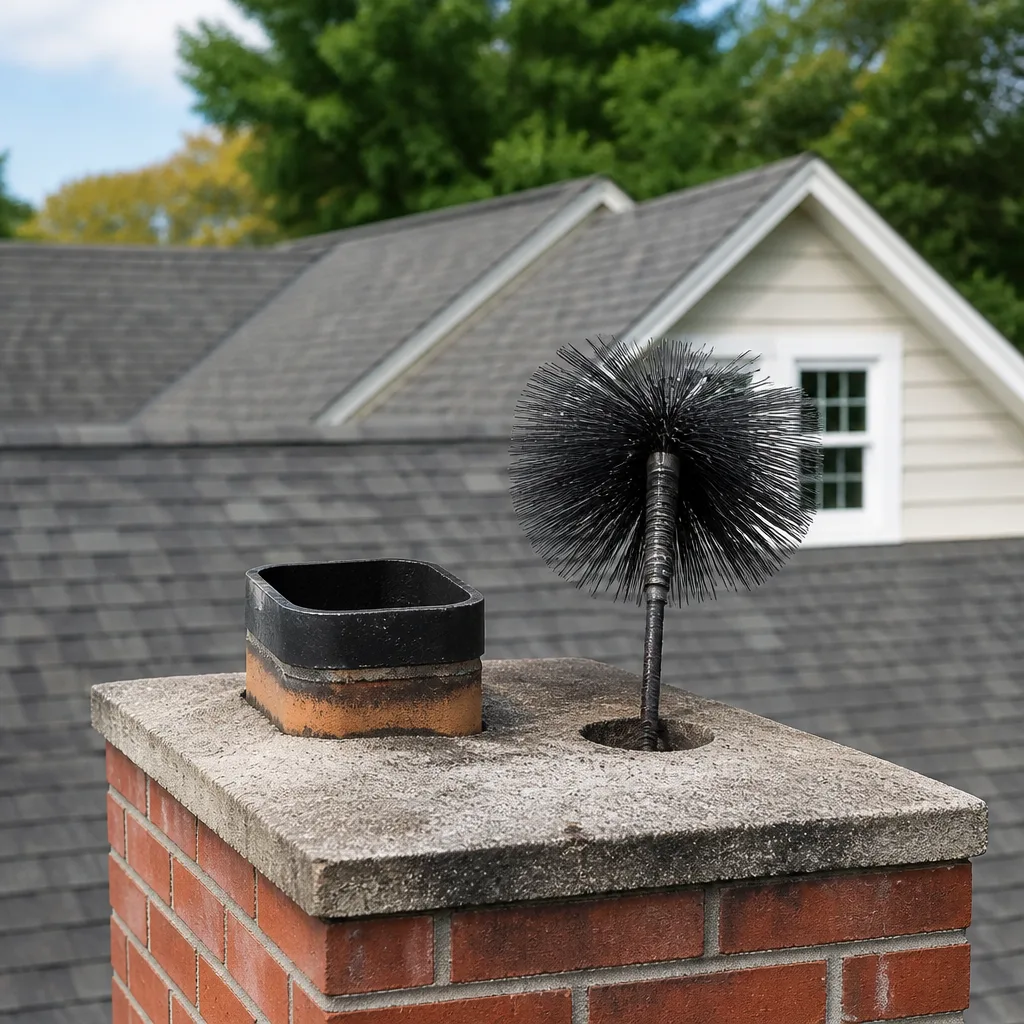 Sweep & inspection
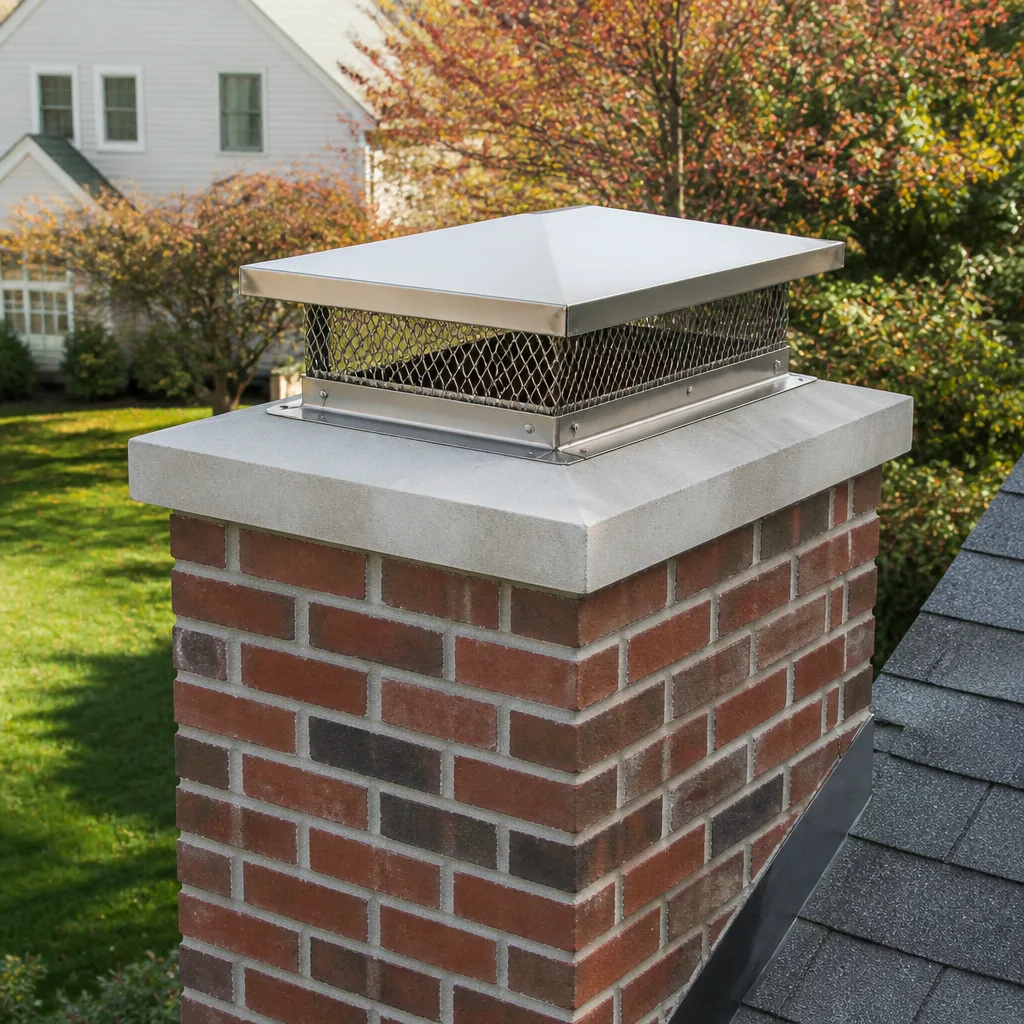 Caps & crowns
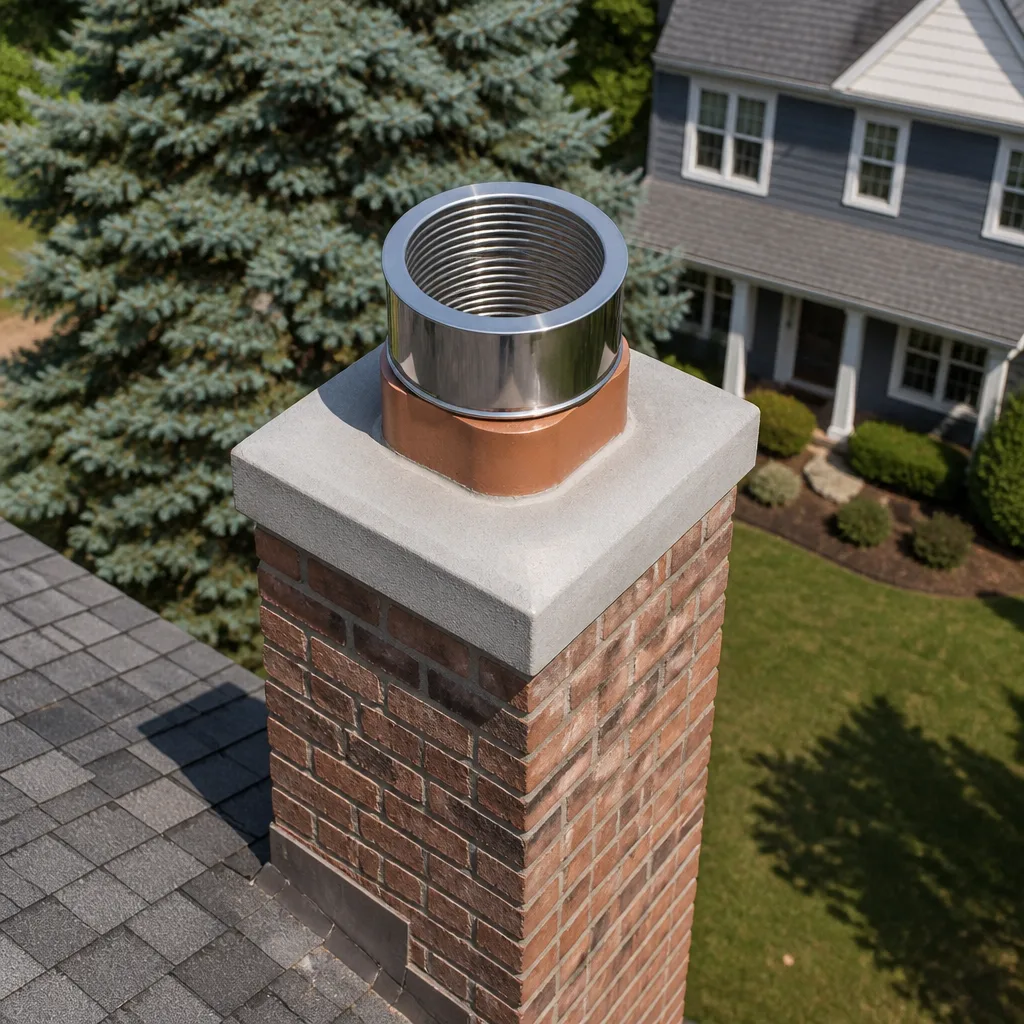 Flue relining
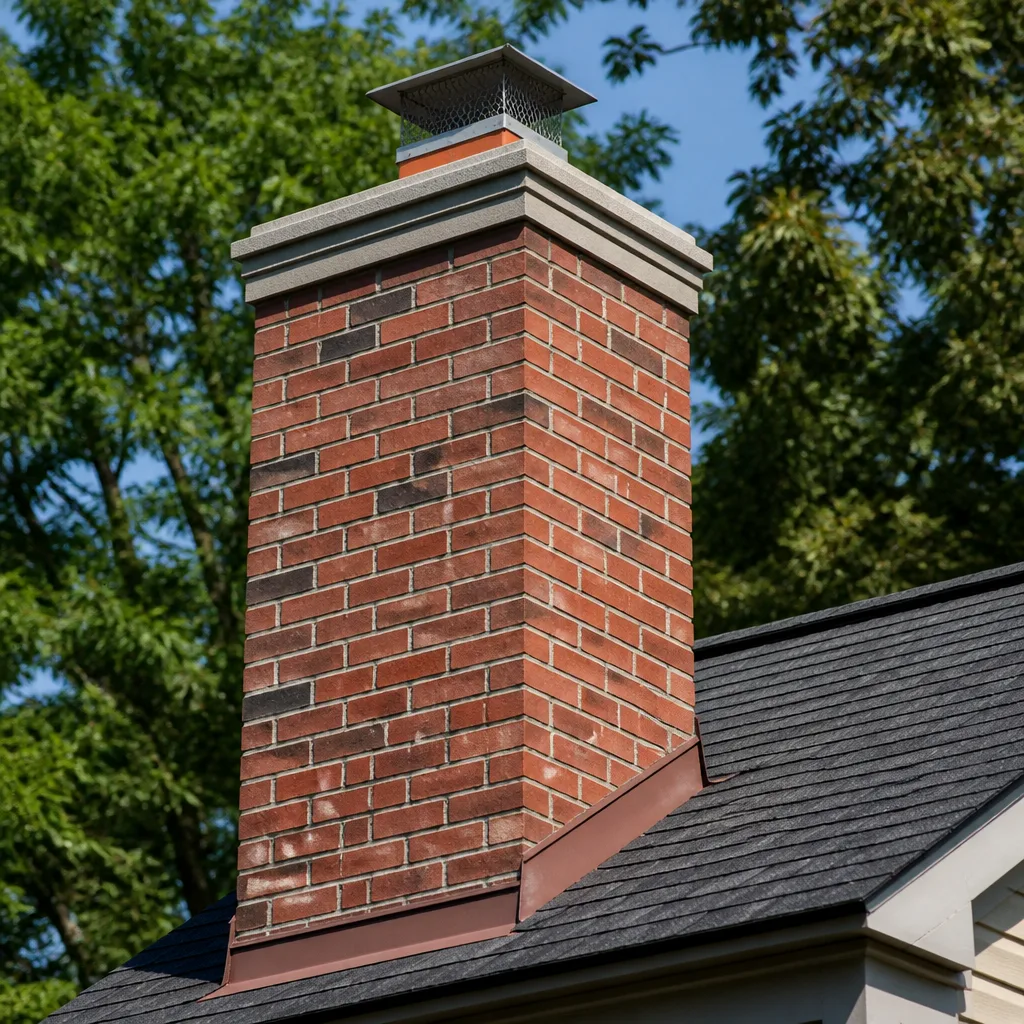 Masonry repair
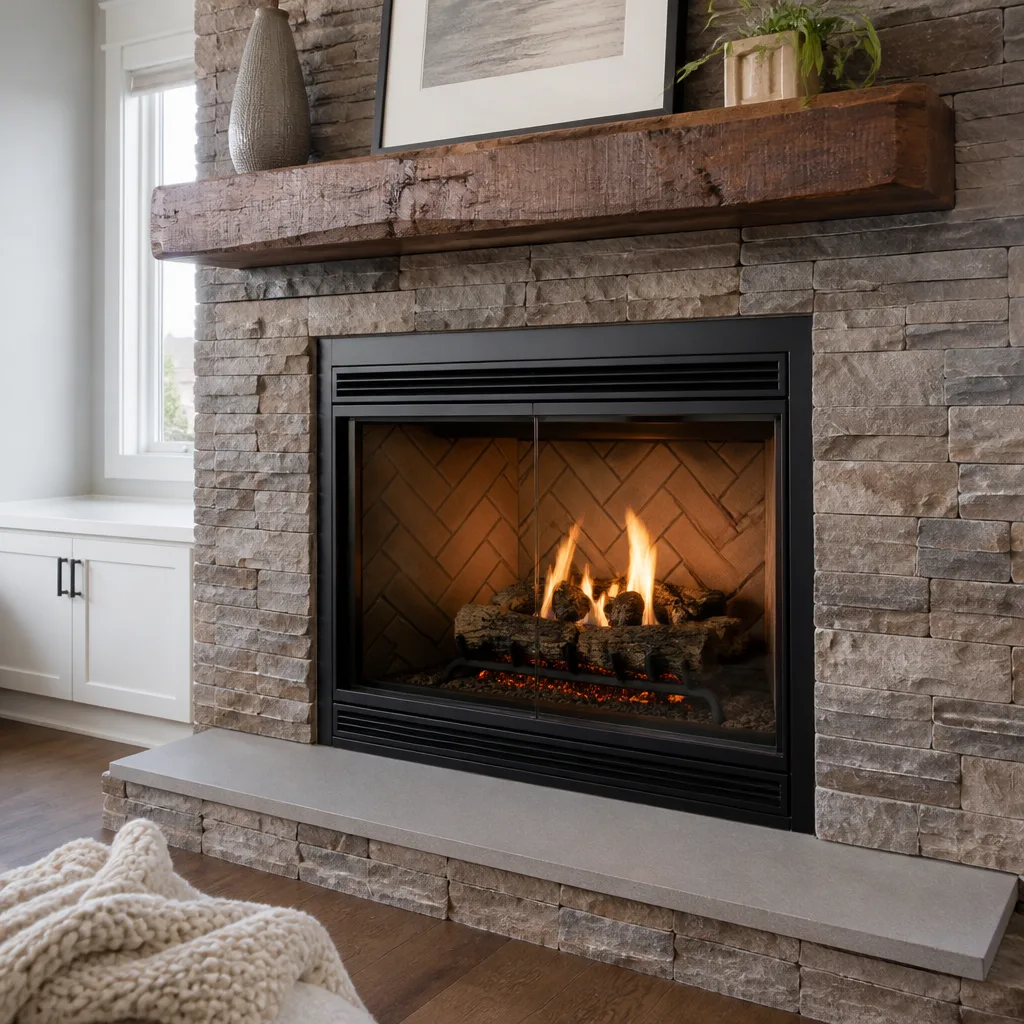 Gas fireplace service
Level 1 sweep and inspection to the NFPA 211 annual standard - flue, crown, cap, and flashing checked and photographed
Chimney sweep logs do not sweep chimneys. They loosen some creosote - which then falls where a brush and vacuum still have to collect it.
Chimney Cleaning Warning Signs: A Coral Springs Homeowner’s Reference Guide
A white chalky stain on the exterior of your chimney isn’t a cosmetic issue. It’s the mortar reporting that water is moving through the masonry and depositing dissolved salts as it evaporates. The stain is the receipt, not the problem.
Most warning sign lists stop at the symptom. You get a bullet point that says “look for white stains” and no explanation of what produced them or how fast it matters. That leaves two kinds of homeowners: the ones who panic at every discoloration and the ones who shrug off a crumbling crown because it still stands. Neither response helps you protect the house.
This guide takes a different approach. Each warning sign gets a plain-language explanation of what’s actually happening in the chimney structure, why it shows up the way it does in Coral Springs, and what the urgency level really is. You’ll learn the difference between a symptom that can wait for your next scheduled service and one that needs a professional on the roof this week.
Quick Answer
The warning signs that most often mean a chimney needs cleaning or repair are: a strong smoky smell in the house when there’s no fire burning, dark creosote buildup visible above the damper, white efflorescence stains on exterior brick, spalling or flaking brick faces, a rusted or stiff damper, animal sounds in the flue, and smoke rolling back into the room instead of going up. Any one of these is worth a camera inspection. Two or more together usually point to a structural issue, not just a dirty flue.
Styles & brands we work with
- Sweep & inspection
- Caps & crowns
- Flue relining
- Masonry repair
- Gas fireplace service
Table of Contents
- Efflorescence: The Stain That Means Water Is Moving
- The Smoky Smell Without a Fire
- Spalling Brick: Where It Happens Changes the Urgency
- Creosote: The Buildup You Can’t See From the Ground
- Damper Corrosion and What It Says About the Liner
- Animal Sounds and Nesting in Broward County Chimneys
- Draft Problems and Backdraft Smoke
- Coral Springs Seasonal Timing: When to Book
Efflorescence: The Stain That Means Water Is Moving
Efflorescence is the white, powdery salt deposit that appears on brick and mortar surfaces. It looks like a bloom of frost or a dusting of chalk. Behind it is a simple physical process: water enters the masonry, dissolves salts naturally present in the brick and mortar, then evaporates at the surface and leaves those salts behind. The stain is evidence of a moisture pathway, not a stain problem.
Coral Springs sits in a wet-dry climate cycle that makes efflorescence show up in a fairly predictable rhythm. Most of the annual rainfall arrives in a concentrated season, then dries out. That wet-then-dry pattern is exactly the condition that drives salt migration. During the rainy stretch, masonry absorbs water through any weak point – cracked mortar joints, a failed crown seal, a hairline crack in the brick face. During the dry stretch, that trapped moisture works its way out through the surface and leaves the salt behind. A chimney that never gets wet won’t effloresce.
What can it mean? Here’s the honest range:
- A single light bloom that brushes off: often a recent wet season and a minor entry point. Worth noting on your maintenance record, not a crisis.
- Stains that return after cleaning, year after year: an active water pathway that needs to be found and sealed.
- Stains concentrated near the crown or the flashing line: the seal at the top or the roof junction is failing and letting water in.
- Stains combined with a chalky, soft, or crumbling mortar joint: the mortar itself is breaking down, which means the masonry’s structural bond is weakening.
The location of the efflorescence tells you where to look. If it’s concentrated near the roofline and the top corners of the chimney, the entry point is likely the crown, the cap, or the flashing. If it’s spread across the face, water is entering through the brick and mortar itself. Either way, the corrective step is diagnosis first, then repair of the actual entry point. Painting over the stain doesn’t fix anything – it just hides the sign while the water keeps moving.
The Smoky Smell Without a Fire
A chimney that smells like a campfire when nothing is burning is usually telling you about a combination of creosote residue and pressure imbalance. The smell is concentrated creosote – the residue left by previous fires – re-liberating volatile compounds into the house. That happens most when humidity is high, or when the house is under negative pressure and pulling air down the flue.
South Florida homes present this symptom differently from what you’d see in a cold-climate house, and it’s worth understanding why. In a cold climate, the smell often shows up in summer because the outside air gets hot and humid while the house stays cool, creating a reverse draft where cooler, denser air above the chimney pushes down into the house. The stack effect that normally pulls smoke up reverses. In Coral Springs, the pattern is more about humidity and pressure from air conditioning. Air conditioning pulls air out of the house through return ducts and creates a slightly negative indoor pressure. A chimney flue is essentially a path of least resistance from outside to inside. Under the right combination of indoor cooling, outdoor humidity, and a partially blocked or dirty flue, outside air moves down the chimney carrying the smokiness of the residue with it.
What does this actually indicate?
- Creosote buildup is significant enough to smell. A lightly used flue has minimal odor. A flue with visible glaze or heavy soot has enough residue to announce itself.
- The flue is not drafting properly. Even a slightly obstructed flue – nesting material, a failed damper seal, a flue lining collapse – will pull air down instead of up.
- Air pressure balance is off. Fixing the pressure issue (a properly sealed damper, a top-sealing cap) plus cleaning the flue usually resolves it.
A quick test: if you close the damper tightly and the smell is still strong, the source is likely the firebox residue itself, not the flue above. If the smell is strongest with the damper open or on a still, humid day with the AC running, the flue and draft are the more likely culprits.
Spalling Brick: Where It Happens Changes the Urgency
Spalling is when a brick face flakes off, pits, or pops away from the body of the brick. It usually appears as a jagged, crumbling face with a flaky crust underneath, and it’s a different problem from efflorescence. Efflorescence is salt on the surface; spalling means the brick itself is disintegrating from the inside out, typically because freeze-thaw action or repeated wet-dry cycling has broken down the brick’s structure.
Where the spalling occurs matters a great deal for urgency. Here’s how to think about location:
- Spalling at the crown level: the very top of the chimney, the crown, and the top courses of brick. This is where water enters most easily, and it’s usually caused by a cracked crown or a failed cap. This is urgent because the damage progresses – each wet season drives more water into the top of the structure, loosening more brick.
- Spalling at mid-height, along the chimney face: usually indicates moisture entering the brick and mortar from outside. It’s serious, especially if it’s spreading or if the mortar joints are also crumbling. This is a mid-range urgency – schedule an inspection within a month or two.
- Spalling at the foundation level, where the chimney meets the roof or the ground: this is the highest-urgency location. If the lower courses of brick are spalling, the structural integrity of the whole chimney is under threat. The chimney may begin to lean or separate from the house. This needs professional evaluation promptly.
For a Coral Springs homeowner, the practical takeaway is to inspect the chimney externally, from the ground with binoculars if needed, and note where the discoloration and flaking appear. Repairs at the crown level are usually smaller – a crown repair, a new cap, sealing of the top courses. Repairs at the foundation level or mid-face can require more extensive masonry restoration. Catching spalling early is almost always cheaper than catching it after the brick face has cracked away. A properly sized cap does a lot to prevent spalling from starting, since it keeps out the water that drives the wet-dry cycle. Products like Gelco and Copperfield caps are the kind we install for that reason – sized correctly, they protect the crown from direct moisture.
Creosote: The Buildup You Can’t See From the Ground
Creosote is the tar-like residue created by wood smoke and deposited on the flue interior. It comes in three forms, and each behaves differently. Stage one is a soot-and-flake deposit that brushes off easily. Stage two is a crusty, flaky deposit that takes more effort to remove. Stage three is glazed, shiny, and rock-hard – the most dangerous because it’s flammable and difficult to clean without professional equipment.
You can’t see creosote from the ground, and you won’t always smell it when the house is cold. The only reliable way to know how much has accumulated – and what kind it is – is a camera inspection of the flue. That’s the core reason we put a camera down the chimney on every job. The homeowner should see exactly what we see. A picture of a glazed flue is much more persuasive than a verbal description. It also lets us measure the buildup and tell you with confidence whether the flue is safe to use and whether a sweep is due this season or can wait.
What drives heavy creosote buildup? Slow burning, unseasoned wood, restricted air supply, and a cold flue. Each of these produces smoke that doesn’t fully combust, and the residue it leaves is thicker. In Coral Springs, the pattern of occasional fireplace use over a long season often produces more staining than a heavy burn in a cold climate would, because the chimney is often cold when it fires, which chills the smoke and drops more creosote in the flue. Couple this with a flue that isn’t swept regularly, and the buildup layer compounds.
Do you need a sweep? Here are the signals, and any one of them is a reason to book:
- Soot visible above the damper or on the firebox walls.
- Reduced draft – smoke doesn’t rise as quickly as it used to.
- A smoky smell in the house (see the previous section).
- Any visible glaze on the flue interior.
- It’s been more than a season or two since the last sweep, regardless of how much you’ve burned.
For a routine annual sweep in Coral Springs, most jobs fall into a modest range, and the written estimate sets the final price after we’ve inspected the flue.
Damper Corrosion and What It Says About the Liner
The damper is the metal plate at the top of the firebox that opens and closes to control air flow. When a damper becomes stiff, rusted, or hard to operate, that’s a signal with two possible meanings. The first is ordinary mechanical wear: the hinges and pivots weaken with age and use. The second is that moisture is reaching the damper and the firebox from above – which usually points to a liner problem, a failed crown seal, or a missing chimney cap letting water in.
How do you tell the difference? Look at the pattern of corrosion, not just the fact that it exists.
- Rust on the damper plate and the firebox walls immediately underneath: the water is coming from above. That’s a liner or cap problem. A missing cap or a broken crown seal lets rain down the flue, and the water lands on the damper.
- Rust concentrated around the damper frame and the front of the firebox: the moisture is likely working in from the smoke chamber or the damper’s own gasket. Worth a camera inspection of the full flue.
- Damper that sticks but isn’t rusty: mechanical wear. A pivot or hinge can be cleaned and adjusted, but the condition of the flue above still needs to be checked.
Why does a corroded damper point to a liner problem? Because the flue liner is the chimney’s structural conduit. Clay tile liners crack from years of thermal cycling. Metal liners can corrode at the seams. When a liner fails, water and combustion gases find their way into the chimney’s internal cavity and around the damper. The damper’s rust is the visible end of that chain. Solving it means addressing the liner, not just replacing the damper.
HeatShield resurfacing is often the answer for a liner with moderate damage – not a full reliner replacement, but a restoration that coats the flue’s interior and re-establishes a smooth, sealed surface. It’s a more targeted repair than a full reliner, and for the right flue it works well. Where the liner is more damaged, DuraFlex stainless steel liner systems handle the full replacement. The important part is diagnosis: we won’t recommend a liner treatment without showing you the camera evidence first. HeatShield is applied to a flue that’s been thoroughly cleaned and inspected – not to a flue with active moisture problems or structural damage.
When a damper is corroded, ask two questions: where did the water come from, and what does the flue look like above it. The answers point to the correct repair.
Animal Sounds and Nesting in Broward County Chimneys
A chimney is an empty, sheltered, vertical space – which makes it a tempting home for wildlife. In Broward County, the species that most often find their way into chimneys include birds (pigeons, starlings, chimney swifts), squirrels, and raccoons. Each one leaves a different pattern of evidence and creates a different problem for the flue.
What each means:
- Chimney swifts: small, fast birds that build nests of twigs glued to the flue wall with saliva. Their nests are protected under federal law in many areas – they’re migratory birds, and their nesting season matters. The nest material itself restricts airflow and can ignite. The birds don’t do structural damage, but the nest does. When you hear high-pitched chirping from the chimney in spring and summer, that’s often swifts.
- Starlings and pigeons: larger birds that build bulkier nests and often leave droppings. Their nests can block the flue entirely. Droppings carry bacteria and parasites, and the material they bring in can create a fire hazard. Their presence usually means the chimney cap is missing or broken.
- Squirrels: enter through an open or missing cap, build nests of leaves and twigs, and sometimes bring in acorns or other food material. The sound is often scratching and rustling rather than chirping. Squirrels also chew, so they can damage a damper or the liner itself if they stay long enough.
- Raccoons: larger animals that need a bigger opening. Their presence suggests a significant cap failure or an open flue that should have been sealed. They can knock down debris that blocks the flue and can damage a liner by dislodging bricks.
The right response is an inspection, not a spray. You need to know what’s in the flue, what condition the flue is in after the animal has used it, and whether the cap is intact. A properly fitted cap installed with a correctly sized Gelco or Copperfield product keeps animals out without blocking proper ventilation. Nesting material must be removed and the flue swept before the chimney is used again – a nest left in place is both a draft blocker and a fire hazard.
Draft Problems and Backdraft Smoke
Smoke that rolls back into the room instead of going up the flue is a draft problem, and it’s usually the easiest warning sign to spot because you can’t miss it. Draft problems have three main causes: a blockage in the flue, a mismatch between the flue size and the appliance, or a pressure problem in the house.
How to narrow it down yourself, without going on the roof:
- Watch the smoke. If the smoke rises a little and then drops back, the flue is pulling but not strongly. If it never rises, the flue is likely blocked.
- Check the damper. Confirm it’s fully open and operating smoothly. A partially closed damper will cause backdraft smoke.
- Check for pressure causes. Bathroom exhaust fans, kitchen range hoods, and even a running dryer can pull enough air to reverse a weak draft. If the smoke rolls back most when those appliances are running, the issue is often pressure, not the flue itself.
- Note when it happens. Backdraft on a cold, damp day that goes away once the fire is hot is a normal cold-flue pattern. Backdraft every time you build a fire is a flue issue that needs a camera inspection.
A flue that’s slightly too large for the fireplace can draft weakly. A flue that’s slightly too small drafts too aggressively, which sounds like a blessing until it pulls the fire too fast and creates additional creosote. When we do a chimney inspection, we measure the flue against the fireplace opening. The sizing relationship is a check most basic sweep companies skip, but it explains a lot of recurring draft problems. A damper that doesn’t seal fully, a cap that’s the wrong size, or a firebox that’s been quietly rebuilt with a different sized opening – these are common causes of chronic draft complaints.
If you’re in Coral Springs and you notice smoke rolling back every time you build a fire, the most useful next step is a proper inspection with a camera. The visible symptom (smoke) is your cue; the camera tells us whether the flue is blocked, mis-sized, or failing. Call Carrington Chimney Sweep and we’ll take a look.
Coral Springs Seasonal Timing: When to Book
The best time to book a routine chimney sweep in Coral Springs is before the burning season, which means in the dry, mild months of late fall and early winter, before you intend to start using the fireplace again. A sweep at the start of the season gives you the full season’s worth of clean burning and ensures the camera inspection finds any issues with time to address them before the first fire. The most important reason for pre-season timing is that it lets a homeowner act on what the inspection finds, rather than being caught mid-season with a flue that needs work.
But that’s not the only timing consideration. In a wet-dry climate, the water-driven symptoms – efflorescence, spalling brick, a corroded damper – typically get worse during and just after the wet season. That means a late-summer inspection often catches early moisture damage, giving time to fix it before the dry season’s expansion-contraction cycle pushes it further. A post-wet-season inspection and a pre-burning-season sweep work well as a two-touch approach for older homes in Coral Springs.
What about the rest of the year? The off-season is the right time for repairs that don’t involve the fire. Liner repairs, cap installations, crown repairs, and masonry work on the chimney exterior can all be done when the fireplace isn’t in use, which removes the urgency and gives the repair the full drying and curing time it needs. Copperfield and Olympia Chimney components used in the flue and cap work, plus HeatShield when the liner qualifies for resurfacing, are all available year-round and fit into a non-burning-season schedule without affecting your fireplace use.
Our technicians have up to 10 years of experience, and we book serving Coral Springs homes with the seasonal timing in mind. If you’re unsure when to schedule, call us with the symptoms you’re seeing and we’ll give you an honest answer on what timing makes sense.
Common Mistakes to Avoid
- Painting over efflorescence or spalling. Paint hides the sign that moisture is moving and traps that moisture against the masonry, accelerating the breakdown. The correct next step is to find and seal the entry point, not paint over the problem.
- Burning unseasoned wood to “test” the flue. Green or wet wood produces excessive creosote, which is the opposite of a test. If you’re worried about your flue, inspect first and test it only after a sweep and inspection says it’s ready.
- Assuming a smoky smell is just old ash. The smell without a fire is a draft and residue signal, and it generally gets worse, not better. It’s worth a camera inspection to know what’s behind it.
- Ignoring a stiff or corroded damper. The damper’s condition is often the visible indicator of a liner problem above. Replacing the damper without inspecting the flue above it can leave the actual issue in place.
- Leaving the chimney cap off. A missing cap invites water, animals, and debris into the flue. A correctly sized Gelco or Copperfield cap is a small cost that prevents several categories of damage down the road.
- Skipping the camera inspection because the chimney “works fine.” The flue can function and still be holding heavy creosote or a cracked liner. Working fine is a performance assessment; the camera gives you a structural one.
- Letting spalling at the foundation level go unaddressed. This is a structural issue and the highest-urgency location on the chimney. It should be evaluated by a professional without delay, not scheduled for a future season.
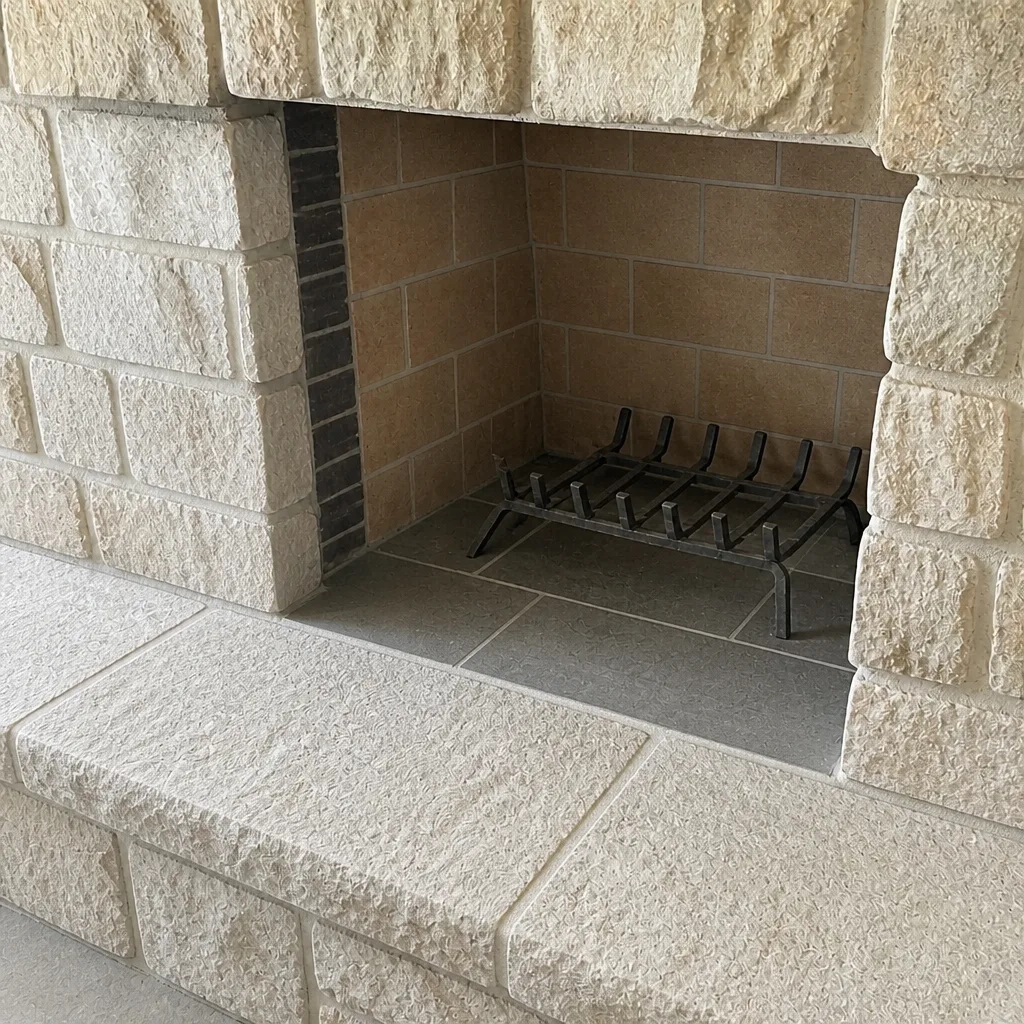
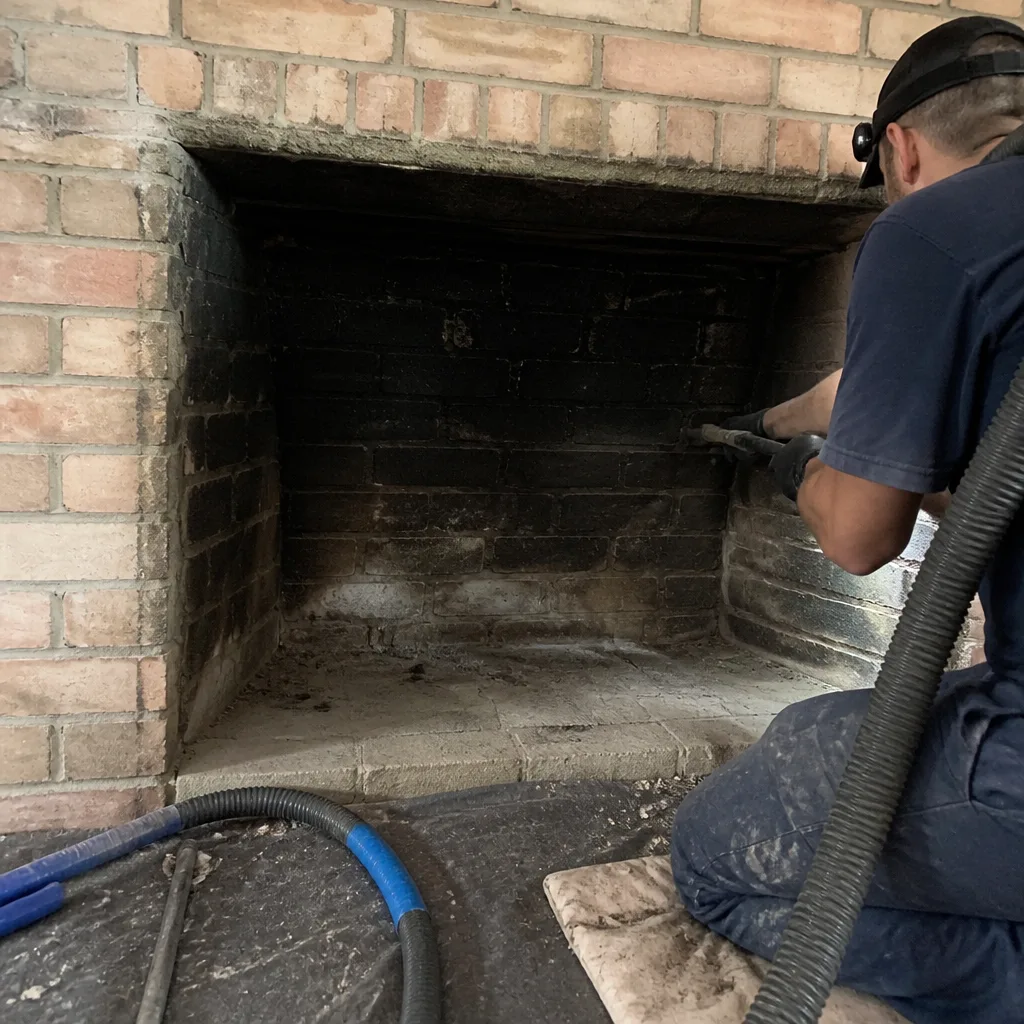
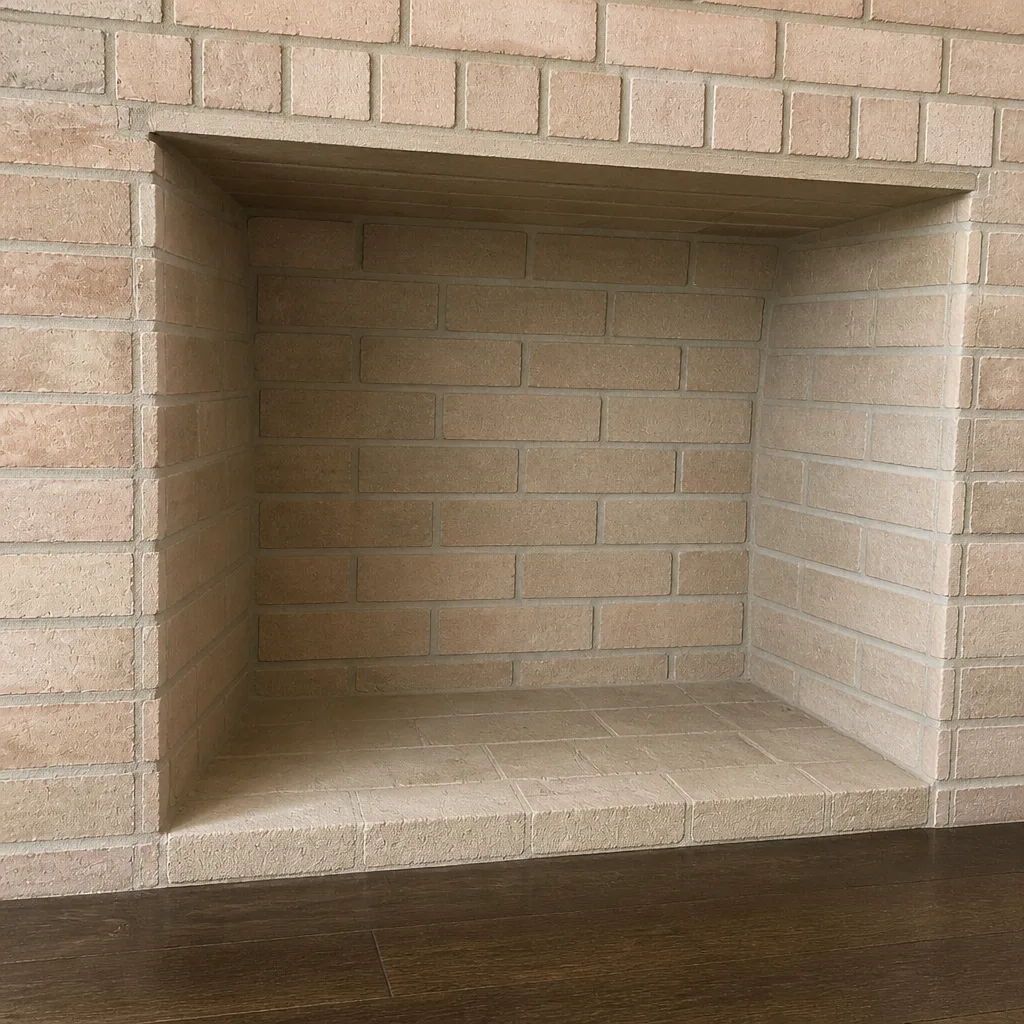
See the difference
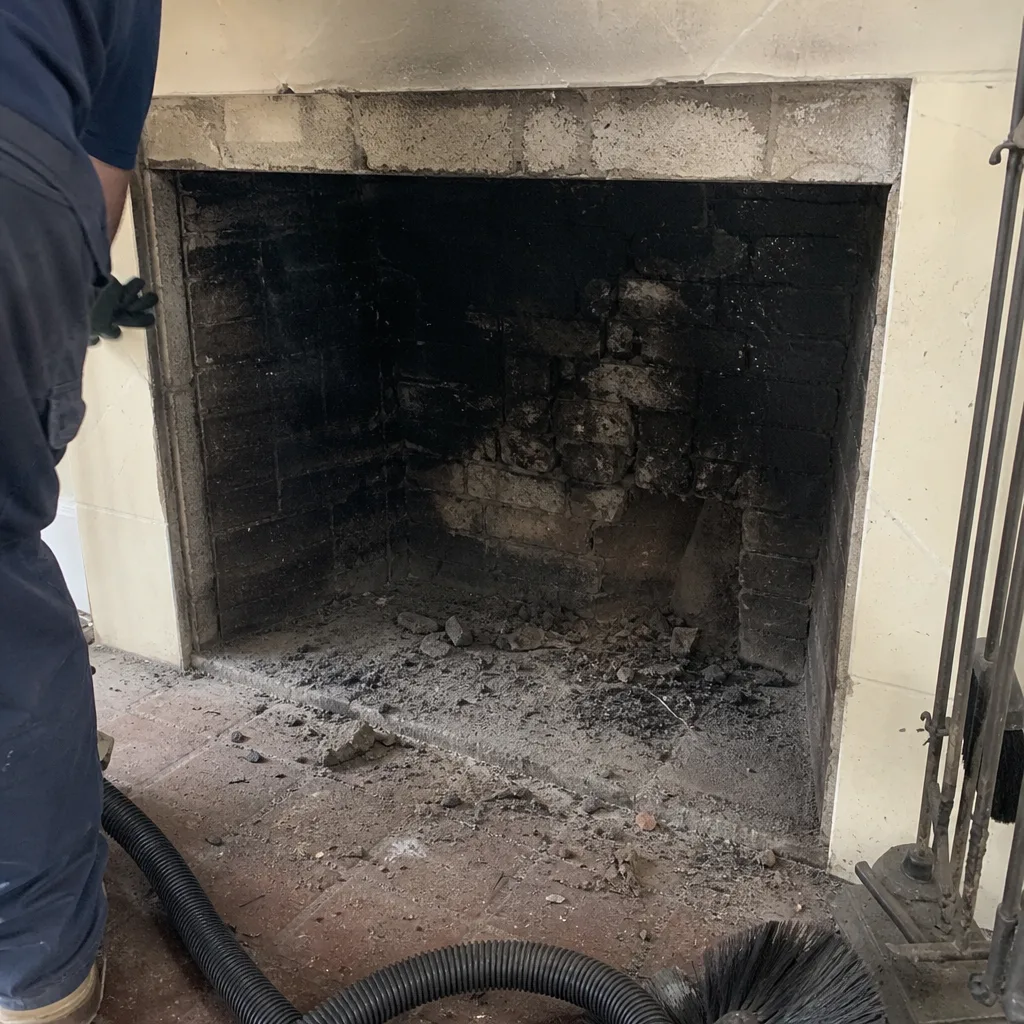 Before
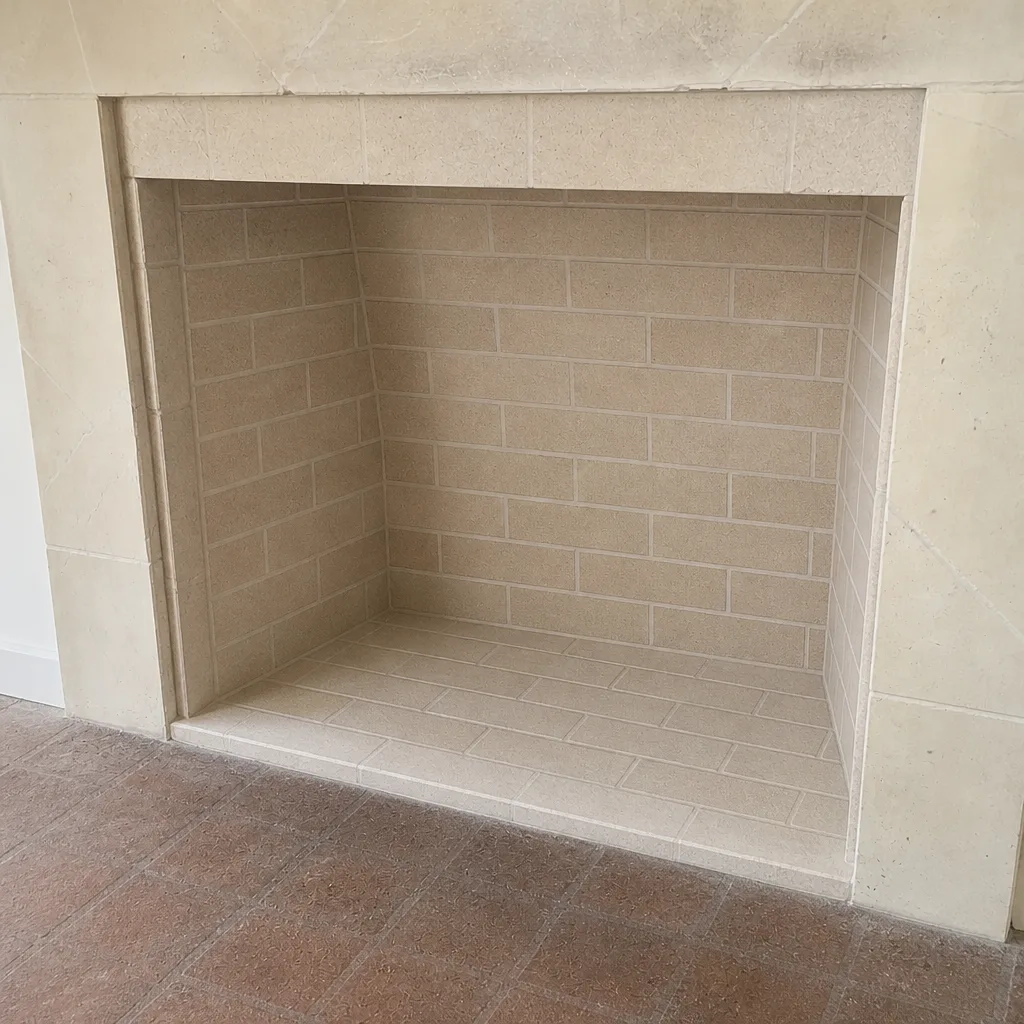 After
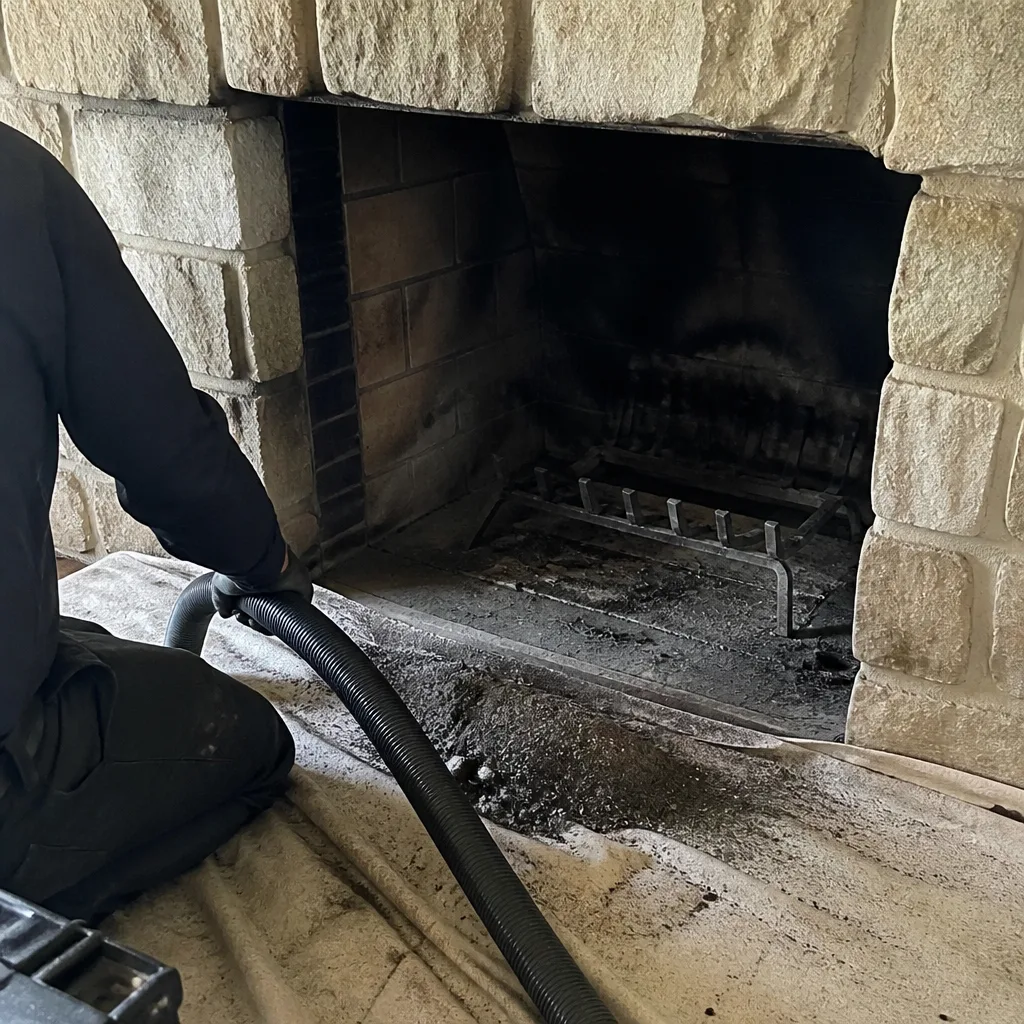 Before
 After
 Before
 After
When to Call a Professional
Some of what we’ve covered is a scheduling call: a routine sweep before the season. Other items warrant a call this week. The ones we’d treat as urgent in Coral Springs homes: spalling at the foundation level or mid-face of the chimney, smoke that rolls back into the room every time you build a fire, animal noise that persists or the presence of a visible bird nest in the flue, and a damper with rust concentrated directly under the flue. The less urgent items – a single light bloom of efflorescence, a stiff but not rusty damper, an occasional smoky smell – should still be inspected, just not in a panic.
When you call chimney sweep, the inspection comes first. We diagnose before we recommend, and we show you what we’ve seen with a camera report and photo record. That way the repair you approve is the repair your flue actually needs. A full-service chimney repair shop can handle the sweep and any repair in one visit, and our inventory of professional-product brands including HeatShield, DuraFlex, Gelco, Olympia, Famco, and Copperfield means we’re matching repairs to the correct materials rather than generic substitutes. Carrington Chimney Sweep offers free estimates in Coral Springs – call (844) 834-5492.
Frequently Asked Questions
Once a year before the burning season is the general recommendation for any chimney used with wood. If your home burns heavily, has visible creosote above the damper, or has a flue liner showing any damage, you may need a sweep more often – the inspection tells you. Call (844) 834-5492 to book a sweep and camera inspection; estimates are free.
It usually means creosote residue is releasing volatile compounds, typically because humidity or negative indoor pressure (from AC and exhaust fans) is pulling air down the flue. In Coral Springs, the AC-driven negative pressure pattern often prompts the smell more than the temperature difference does. A camera inspection shows whether the flue has heavy residue or a draft obstruction. Call (844) 834-5492 for an inspection quote; estimates are free.
Efflorescence itself is cosmetic, but it’s a sign that water is moving through the masonry. That movement, over time, is what causes deeper damage to brick and mortar. If the stain keeps returning or appears alongside crumbling mortar, it’s a structural signal, not a cosmetic one. Call (844) 834-5492 to book a free estimate on a moisture-path inspection.
Spalling is a physical flake or pit in the brick face, and you can feel it with a light touch; staining is surface color that doesn’t come off with a brush. Efflorescence is a powdery salt deposit on the surface; spalling is the brick itself breaking down. The location of the spalling – crown level versus foundation level – tells you how urgent the issue is. Call (844) 834-5492 if you notice spalling at the foundation level.
You can sweep a lightly used flue with the right equipment, but a camera inspection and diagnosis of the flue’s condition – and of any structural or liner issues – really needs professional eyes. Liner damage, animal nests, and creosote stage-three glazing all look different on camera than they do from the firebox. Call (844) 834-5492 for a professional sweep and inspection; estimates are free.
Don’t run the fireplace. The nest material restricts airflow and can be a fire hazard, and a corvid or a raccoon in the flue can be physically dangerous to remove without the right protection. The nest also needs to be removed and the flue inspected for damage the animal may have done. Call (844) 834-5492 for an inspection and cap replacement quote; estimates are free.
The Bottom Line
Warning signs are only useful if you understand what they mean. A chalky stain is reporting water movement. A smoky smell without a fire is reporting creosote residue and a draft problem. A rusted damper is reporting liner damage above it. Spalling at the foundation is reporting structural erosion. Animal noise is reporting a failed cap. None of these are cause for panic, and none should be dismissed as cosmetic. If you live in Coral Springs and are seeing two or more of these signs, the right next step is a camera inspection and a written repair plan – not a list of symptoms to memorize.
Call (844) 834-5492. We answer 24/7. Fast dispatch from 7am to 7pm, Sunday through Friday. Estimates are free, and the diagnosis comes before the recommendation.
Written by the team at Carrington Chimney Sweep.